Reading the title of "Desperately Seeking Paul McCartney,"
Read our exclusive interview with Ruth Anson Sowby. |

Reading the title of "Desperately Seeking Paul McCartney,"
Read our exclusive interview with Ruth Anson Sowby. |
APPLE CORPS LTD., CIRQUE DU SOLEIL AND EMI MUSIC ANNOUNCE THE GLOBAL
DVD RELEASE OF 'ALL TOGETHER NOW' ON JUNE 24
Feature-Length Documentary Chronicles The Making Of The Beatles' "LOVE"
by Cirque du Soleil
London, England - April 16, 2008 - On June 24, 2008 Apple Corps
Ltd./Cirque du Soleil will release the feature-length documentary 'All
Together Now' on DVD, which will be marketed and distributed worldwide
by EMI Music. The film details the story behind the unique partnership
between The Beatles and Cirque du Soleil that resulted in the creation
and launch of "LOVE," the stage production still wowing audiences at
The Mirage in Las Vegas, and the double Grammy-winning album of the
same name. The film is dedicated to the memory of Neil Aspinall, an
Executive Producer of the DVD.
The DVD's total running time is 122 minutes, including the 84-minute
documentary film and bonus features. The film and extras are presented
in DTS & Dolby Digital 5.1 Surround and Dolby Digital Stereo.
'All Together Now' faithfully recounts how the "LOVE" project came into
being, borne from the personal friendship between George Harrison and
Cirque du Soleil founder Guy Laliberte. George saw how the twin talents
of Cirque's artistry and The Beatles' music could be fused into
something new and totally original.
The director, Adrian Wills, records early meetings between the Cirque &
Apple Corps Ltd. creative teams, as well as contributions from Sir Paul
McCartney, Ringo Starr, Yoko Ono Lennon and Olivia Harrison discussing
how The Beatles' music can be used in a different way. We hear about
the decision to utilize the combined talents of Sir George Martin and
his son Giles Martin to produce what became a 90-minute soundscape
created from The Beatles' multi-track recordings and how this new audio
adventure was being quietly worked on in the famous Abbey Road Studios
in London, England whilst the first creative ideas for the show were
being formulated in Montreal, Canada.
These early stages of the project were all filmed, as were the first
rehearsals at the Mirage Hotel theatre in Las Vegas, which was
completely rebuilt with a one-of-a-kind sound system and complex round
staging to house the "LOVE" show. George and Giles Martin, the show's
Musical Directors, were involved every step of the way with the
remarkable Cirque du Soleil creative team, performers and backroom
staff.
It wasn't all "plain-sailing" and there has been no attempt to disguise
some of the disagreements that took place along the way regarding how
some of the songs would be portrayed visually. These creative
differences, a necessary part of the overall process of bringing "LOVE"
to its most vibrant life, illustrate the participants' love and respect
for the music and vision of The Beatles.
In addition to their roles within the main feature, George and Giles
Martin, along with engineer Paul Hicks, also pop up in another piece
titled "Changing The Music" which reveals in fascinating depth how the
music was created and the challenges they faced. They explain how they
sourced some of the individual instruments and effects and how they
were encouraged to experiment.
The 'All Together Now' documentary and bonus features provide a
fascinating insight into the creative skills and passion that went into
making this project a groundbreaking critical and commercial success.
DVD contents
'All Together Now' documentary (84:00)
Bonus Features:
- "Changing The Music" (22:00): A behind-the scenes look at the
decision-making process for the "LOVE" concept and music production.
- "Music In The Theatre" (07:00): A look at the process of creating the
"LOVE" show's unique audio design.
- "Making 'LOVE'" (09:00): A backstage pass to explore the design of
"LOVE," including the art direction, costumes, props, screen imagery
and the use of The Beatles' voices in the "LOVE" stage production and
its soundtrack .
DVD technical details
1 x DVD-9
PAL and NTSC
All regions
www.thebeatles.com
www.cirquedusoleil.com
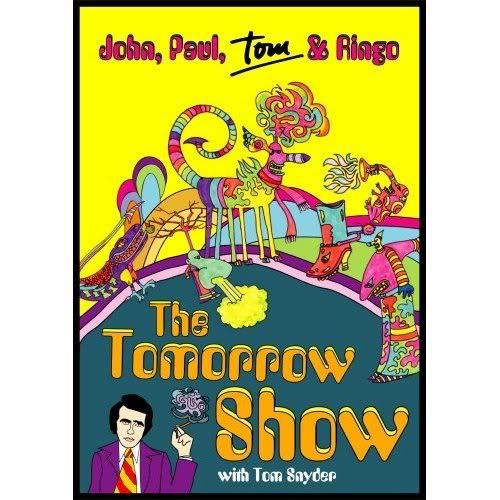
If Dick Cavett was the hip big brother of talk show hosts, Tom Snyder was the fuddy duddy uncle who you had to explain everything to. That's quite evident in "The Tomorrow Show With Tom Snyder: John Paul Tom & Ringo"
The best of the interviews is clearly the one with John Lennon, which was first shown in 1975 and replayed the night after Lennon was killed with new guests added. It's the replay that's included here. If Snyder comes across a little, let's say, naive, John, in a very accomodating mood, sets Snyder straight. "Were the Beatles before the groupies?", Snyder asks at one point.
The replay includes comments from a still shocked "Double Fantasy" producer Jack Douglas and rock critic Lisa Robinson.
That's not the case with the Paul McCartney interview, originally aired on Dec. 20, 1979. It's Paul and Linda, first, who are then joined by Denny Laine and Laurence Juber via satellite discussing Wings before a show at London's Rainbow Theatre. The interview gets off to a horrible start as Snyder makes an impatient Paul and Linda wait (actually telling Paul to "hang on a minute ... we're not ready yet") for an incredibly long introduction (including a boring technical update of the equipment being used for the interview) and a playing of the "Spin It On" music video. Paul and Linda manage to stay polite, though various comments through the interview give evidence that they did not enjoy the experience. No surprise: Few of the questions rise above the pedestrian level. Despite the success being enjoyed by Wings, Snyder even asks about the possibility of a Beatles reunion. When Juber and Laine join the interview, Snyder has to ask the two to introduce themselves because he clearly doesn't know who is who.
The interview with Ringo, recorded in Los Angeles and first aired Nov. 25, 1981, is pretty run of the mill for Ringo, who seems to treat it like nothing special. It really isn't. Snyder starts off asking the meaning of the title of Ringo's then-current album, "Stop and Smell the Roses" after years of what Snyder calls "turmoil, frenzy and confusion," then following up with how Ringo likes being 40. Snyder also discusses John Lennon, who died less than a year before the interview was taped. Barbara Bach also is interviewed, and the couple discuss their apperances in the movie "Caveman."
The quality of the Lennon and Ringo interviews are excellent, especially the Lennon, which has been a favorite among collectors in copies taken from a long out-of-print video release. The McCartney interview, though not as sharp in quality as the other two, seems to have come from a decent video master. Still, it's surprising the quality isn't better.
Despite the reservations, "The Tomorrow Show With Tom Snyder: John Paul Tom & Ringo"
Composing the Beatles Songbook: Lennon & McCartney 1957-1965:
Composing the Beatles Songbook: Lennon & McCartney 1957-1965
The group analyzes the development of Lennon and McCartney as songwriters. The disc includes clips from "The Ed Sullivan Show," The Royal Variety Performance and other appearances, plus there are clips of the Rolling Stones, the Byrds and Bob Dylan. Any discussion of Lennon and McCartney is, of course, subjective, but we think this disc will provoke a lot of discussion on its own. The disc includes extras with extended interviews, biographies and a Beyond DVD section. Don't miss this.
The Beatles were quite a world traveling bunch even before they conquered the musical world in 1964. A series of DVDs by Artsmagic retraces those footsteps and gets fans back to where the Beatles once belonged.
The Beatles - Liverpool (Two-Disc Edition), 


Leigh also hosts "The Beatles, Hamburg and the Hamburg Sound," a special look at the Beatles' sites in Hamburg and their link to British rock 'n' roll. Sites visited include the Indra Club, the Star Club and the Kaiserkeller. The trip concludes with a visit by Kingsize Taylor, now a resident of Hamburg. 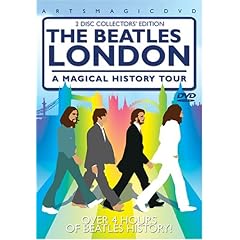

Yannicos, in an email to us, commented on the interviews:
Yes, David Peel is quite eccentric. But once you get past that, you see he is a really sincere, nice person and you can see why John and Yoko were friends with him in the early 70s.
All the interviews were fascinating to me. I learned a lot from speaking with each person. The one that stood out was with Tamiko Steinberg. She is a hidden treasure! Here is someone who spent eight hours a day with John Lennon for two straight months. She got to know him quite well and she tells some great stories about her experiences with him.

Bob Dylan - Don't Look Back (1965 Tour Deluxe Edition):
The real miracle, however, is viewing "Don't Look Back," a vivid chronicle of the singer's 1965 British tour and one of the most stunning rock documentaries ever and now available in a deluxe expanded two-disc set.
Dylan's music is, of course, the focus, but the camera's eye also focuses in on Dylan's world. Especially riveting are his encounters with the media and the Establishment. Both are clearly nervous about approaching Dylan, clearly not knowing what to expect and the singer plays on their apprehension.
In one memorable scene, Dylan takes a Time magazine interviewer named Horace Judson (and the media as a whole) to task.
"'Cause you know I've never been in Time magazine and yet this hall's filled twice, you know, and I've never been in Time Magazine. I don't need Time Magazine ... and I don't think I'm a folk singer. You'll probably call me a folk singer, but, you know, the other people know better 'cause the people, you know, that buy my records, listen to me, don't necessarily buy Time Magazine. You know the audience that subscribe to Time Magazine? The people that work during the day and read it small, right? And it's concise and there's pictures in it."
"I have the story [Judson] wrote. He wrote a very good piece on Dylan. I thought Dylan was kind of nice in the end. He made jokes out of it. When I show the film, especially to kids, they want to see that as someone thrashing TIME. But it isn't that. He's thrashing a whole system of media that people had been thrashing for a long time. I never thought of it as mean-spirited.
 and Don't Knock the Twist / Twist Around the Clock
 , two two-fer film reissues of four vintage rock films that Sony has just released. The films are the standard rock films of the era with the usual plots about the music being persecuted and the usual remedy of "Let's put on a show!" They're basically just excuses for the music they contain, as good as some of that music is.
The trailer for "The U.S. Vs. John Lennon"
"The U.S. Vs. John Lennon" (Lionsgate): Everyone knows the story of John Lennon and the Beatles. But it's less known, especially to younger audiences, how Lennon was the focus of FBI investigations during the Vietnam War Era because of the Nixon Administration's paranoia against protesters.
"The U.S. Vs. John Lennon" , which goes on sale Feb. 13, is a frightening reminder of that. The 96 minute documentary looks at how John Lennon changed from a cuddly Beatle to an outspoken protester of the Vietnam War and the Nixon Administration policies. It also recounts how the government used the controversy to hold the U.S. citizenship Lennon hoped for in hostage.
It was indeed a scary time. As Yoko recounts early in the film, while the Lennons were on a Michigan stage playing a benefit concert to help free John Sinclair, who was busted for possession of a small amount of marijuana, the FBI was in the audience taking down the lyrics to his songs. The film recounts how the government spied on him through wiretaps.
The hatred and pervasity of the Nixon Administration was chilling. In one of the bonus features, Nixon Administration member G. Gordon Liddy recalls how he ordered his children planning to attend a public event not to sing Lennon's song "Imagine" when it was played there.
The DVD includes interviews with his widow, Yoko Ono Lennon, George McGovern, Bobby Seale, Gore Vidal, John Dean, author Ron Kovic, John Sinclair, Geraldo Rivera, Walter Cronkite and Mario Cuomo.
It includes 10 clips of additional footage left out of the film. The most touching is a reading of the letter Yoko wrote to the New York State parole board requesting her husband's killer remain in jail. It's an emotional moment for Yoko, who manages to read the letter, but not without her voice quivering to the point of almost breaking.
For anyone who lived through the '60s turmoil, the documentary brings back frightening reminders of the paranoia that swept the country.
It also sends a message that the nation should have learned from its mistakes. Unfortunately, that doesn't seem to be the case thanks to the Bush Administration.